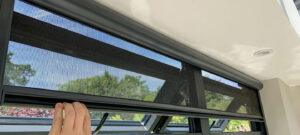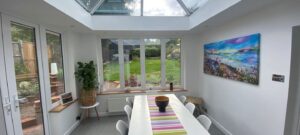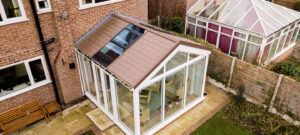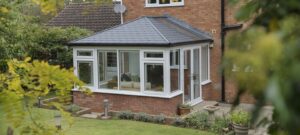

Polycarbonate and insulated sandwich panels create very different conservatory environments. Polycarbonate prioritises light weight and daylight, while insulated panels focus more heavily on thermal control, opacity and reduced rain noise.
Neither product should be judged in isolation. The existing frame, ventilation, glazed walls, orientation and intended room use influence the result. A survey should confirm that the structure and glazing bars are suitable for the chosen panel.
Rosy Roof Conservatories provides insulated conservatory roof replacement solutions across Leicester, Derby and nearby areas.
Thermal Performance
Insulated panels use a core and outer facings to reduce heat transfer, generally offering stronger roof insulation than standard polycarbonate. This can help the room retain warmth and slow summer heat gain. The glazed walls and air leakage still matter, so the roof upgrade should be viewed as part of the whole conservatory.
Summer Comfort
Opaque insulated panels reduce direct solar radiation through the roof, which can make a substantial difference in exposed conservatories. Ventilation, shading to wall glazing and orientation continue to influence peak temperatures. A cooler roof does not remove the need for opening windows or sensible solar control elsewhere.
Daylight
Polycarbonate admits diffuse daylight across the roof, while opaque panels reduce overhead light. Many homeowners prefer the calmer interior created by insulated panels, but darker adjoining rooms need consideration. Mixed roof layouts or additional glazing may preserve useful daylight without retaining an entirely translucent roof.
Rain Noise
Rain impact is often more noticeable on lightweight polycarbonate. Layered insulated panels can reduce vibration and sound transmission, making conversation and home working easier. The improvement depends on panel construction and fitting, and the remaining glazed elements and hard interior surfaces will still affect room acoustics.
Weight and Structural Suitability
Replacement panels are designed to remain relatively lightweight, but their weight and support requirements can differ from the existing sheets. The installer should check frame condition, spans, glazing bars and supporting walls. Do not assume that any panel can be substituted purely because its thickness fits the bar.
Weather Resistance and Sealing
Both systems depend on correct cappings, seals, closures, flashing and drainage. Older polycarbonate can become brittle or allow moisture into its cells, while any replacement panel can leak if junctions are poorly detailed. System compatibility and installation quality are as important as the panel material.
Appearance and Interior Design
Polycarbonate retains the familiar bright conservatory look. Insulated panels create a more solid ceiling plane that can feel closer to a conventional room and may support a different colour scheme. External colours, internal finishes and remaining roof bars should be considered before the roof is ordered.
Which Option Suits Your Use?
A lightly used garden room may continue to perform adequately with sound polycarbonate. A home office, dining room or year-round family space is more likely to benefit from stronger insulation and reduced noise. Define the room’s future use before deciding what performance improvement is worth investing in.
What to Prepare Before Requesting a Quotation
A useful quotation begins with accurate information. Photos and measurements can help an initial conversation, but they do not replace a survey where condition, access, compliance or hidden construction affects the recommendation. Prepare:
- the outcome you want and the problem you need to solve
- relevant photographs, drawings, manuals or previous reports
- known defects, changes and earlier repair or installation history
- access limits, operating hours and important programme dates
- questions about scope, exclusions, warranties and aftercare
Compare Conservatory Roof Options
Rosy Roof Conservatories can assess the roof and explain how insulated panels would affect comfort, light and appearance. Homeowners should base the decision on the existing structure and intended use rather than choosing from product images alone.